Washington Accord: implementation slips to 33.3% between August and October 2026
According to the African Peace Agreements Barometer, implementation of the peace agreement between the DRC and Rwanda fell by 1.7 points in three months, held back by continued fighting and deadlock on security issues.

Translated from French · Read the original
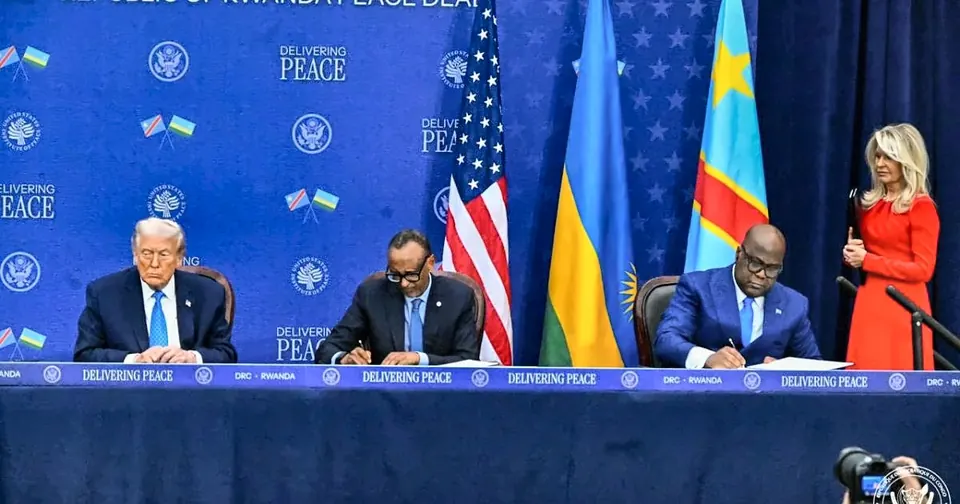
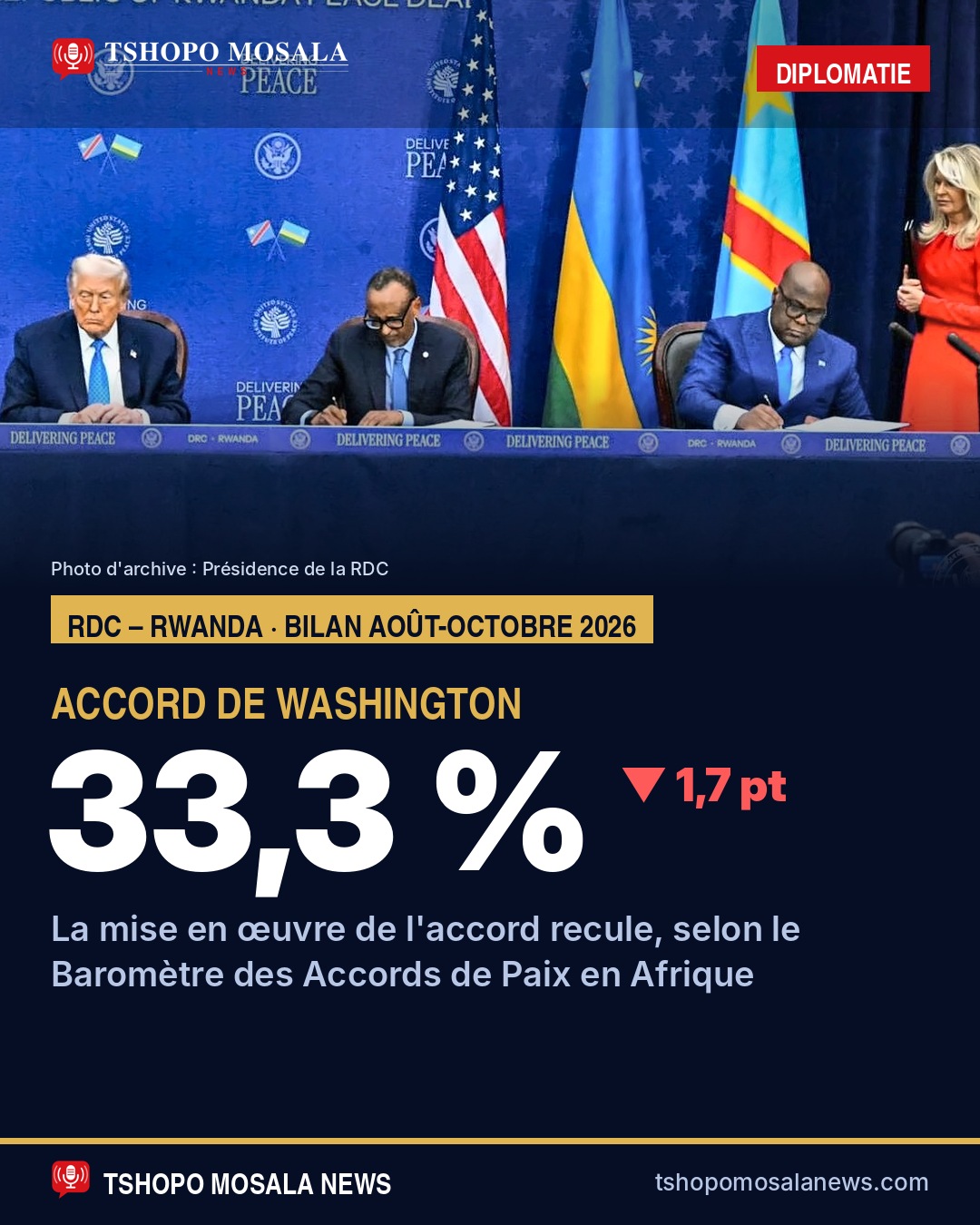
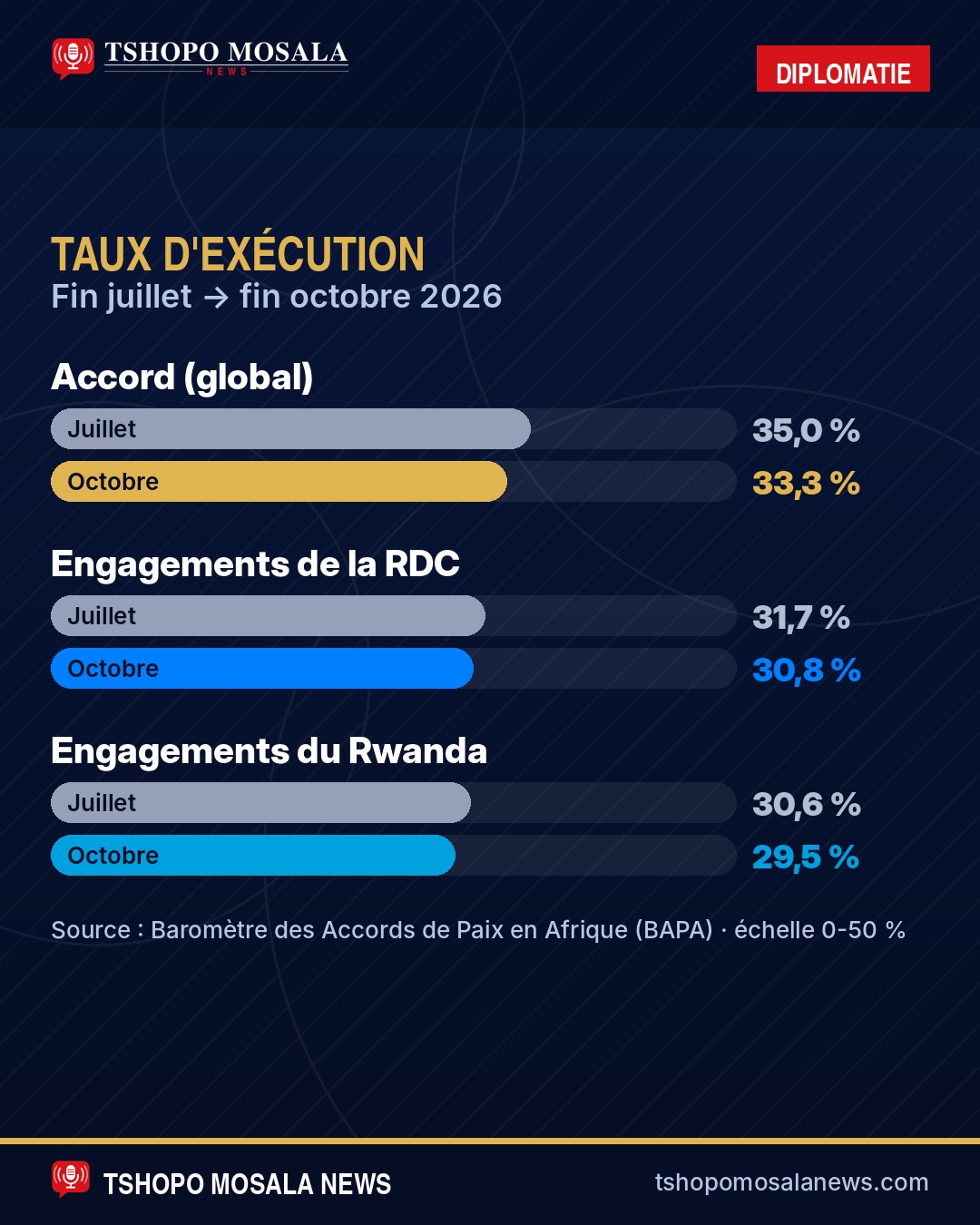
Implementation of the Washington Peace Agreement, concluded on 27 June 2025 between the Democratic Republic of the Congo and Rwanda under the auspices of the United States, slipped slightly between August and October 2026. The latest assessment report of the African Peace Agreements Barometer (BAPA), consulted on Monday 2 November, puts the overall implementation rate at 33.3% at the end of October, down from 35% at the end of July, a drop of 1.7 points.
Both signatories are affected. The DRC's commitments are 30.8% implemented, compared with 31.7% three months earlier; Rwanda's have fallen from 30.6% to 29.5%.
What is holding things back
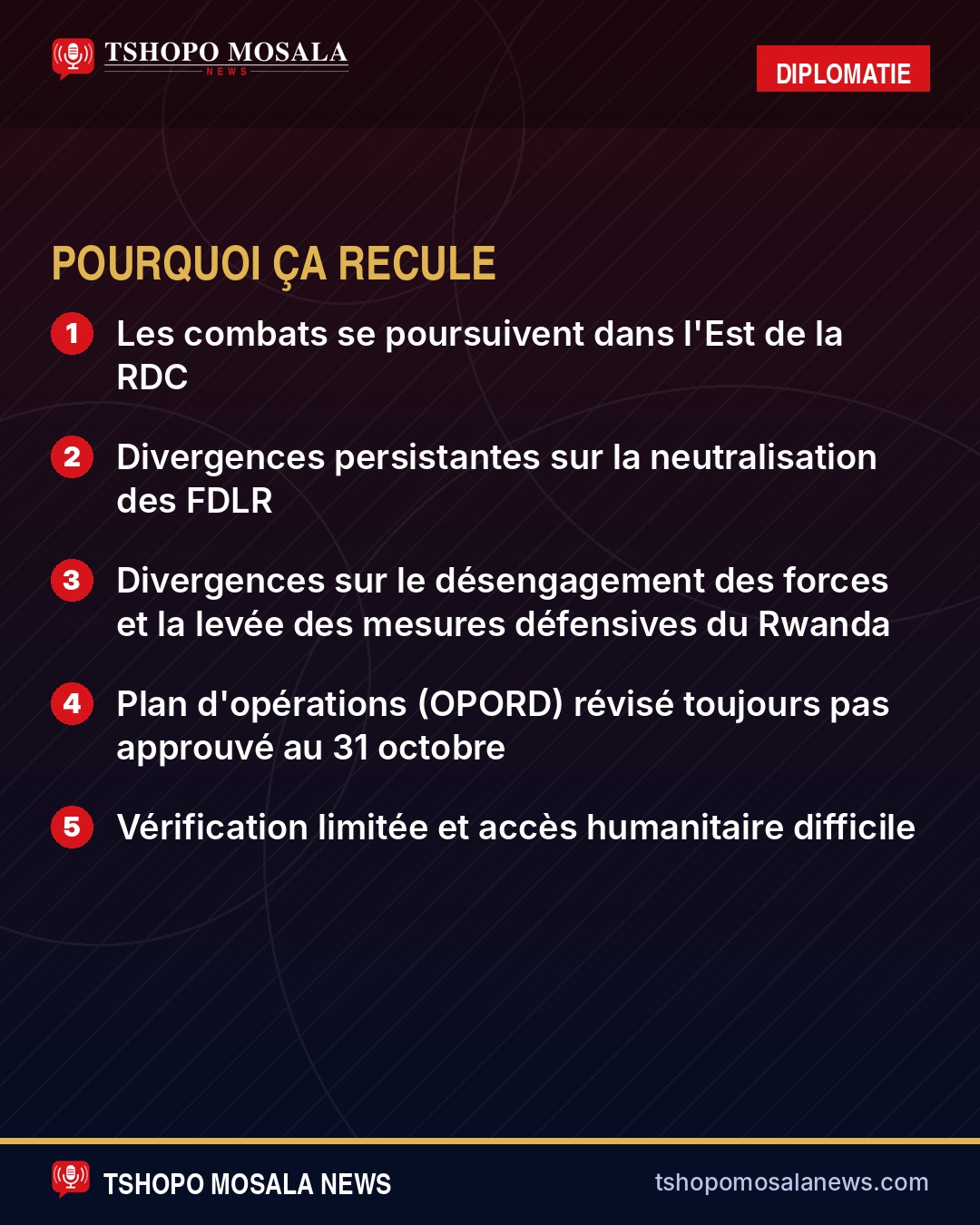
BAPA cites continued fighting in eastern DRC and persistent disagreements over the neutralisation of the Democratic Forces for the Liberation of Rwanda (FDLR), as well as over the disengagement of forces and the lifting of Rwanda's defensive measures. Limited verification capacity, deteriorating political and security relations and difficulties with humanitarian access are also listed.
According to the report, the lower score is mainly due to the downgrading of two planning tasks linked to these security commitments: the harmonised plan to neutralise the FDLR and the harmonised plan for the disengagement of forces and the lifting of Rwanda's defensive measures. Each fell from 7.5 to 5 points out of 10, from “intermediate” to “minimal” implementation. BAPA stresses that this score concerns the state of planning and does not necessarily mean an equivalent setback in substance: the actual neutralisation of the FDLR and the actual disengagement of forces are assessed separately.
The operations order in question
The barometer is also concerned about the incomplete implementation of the Operations Order (OPORD). Drawn up in September 2025 to turn the Concept of Operations (CONOPS) into coordinated action on the ground, it was due to start being implemented in October 2025.
After phase 1 was reviewed in November 2025, notably with intelligence-sharing on FDLR locations and a DRC campaign urging these fighters to disarm, phase 2 stalled. Covering the planning of operations against the FDLR and the lifting of Rwanda's defensive measures, it has stumbled over the sequencing of operations, verification mechanisms and the changing security situation.
At the sixth meeting of the Joint Security Coordination Mechanism (JSCM) in August 2026, the two sides considered reviewing operational planning. A JSCM conference on the OPORD from 20 to 22 October 2026 advanced work on a revised version, but no new text had been officially approved by 31 October. For BAPA, without an updated plan that clearly sets out responsibilities, realistic deadlines, measurable milestones and credible verification, the security commitments remain hard to implement.
Little change on the ground
Despite the Washington Accord and the Doha process, the military situation has barely moved. Fighting continues between the Congolese army and the AFC/M23 rebellion, which Kinshasa and UN experts say is backed by Rwanda, a claim Kigali disputes. The movement has become the Front for the Refoundation of the Nation (FRN), led by Joseph Kabila. Mutual accusations of ceasefire violations and differing interpretations of the commitments continue to fuel mistrust between Kinshasa and Kigali.
Key points
- Overall implementation rate: 33.3% at the end of October 2026, down from 35% at the end of July
- DRC: 30.8% (down from 31.7%); Rwanda: 29.5% (down from 30.6%)
- Two security planning tasks downgraded from 7.5 to 5 out of 10
- No revised OPORD approved as of 31 October 2026
Source: African Peace Agreements Barometer (BAPA). Archive photo: Presidency of the Democratic Republic of the Congo.
In pictures
Source : Baromètre des Accords de Paix en Afrique (BAPA)